
Logistics
Cold-Chain Logistics for Research Compounds
How temperature-controlled shipping protects peptide integrity from lab to lab.
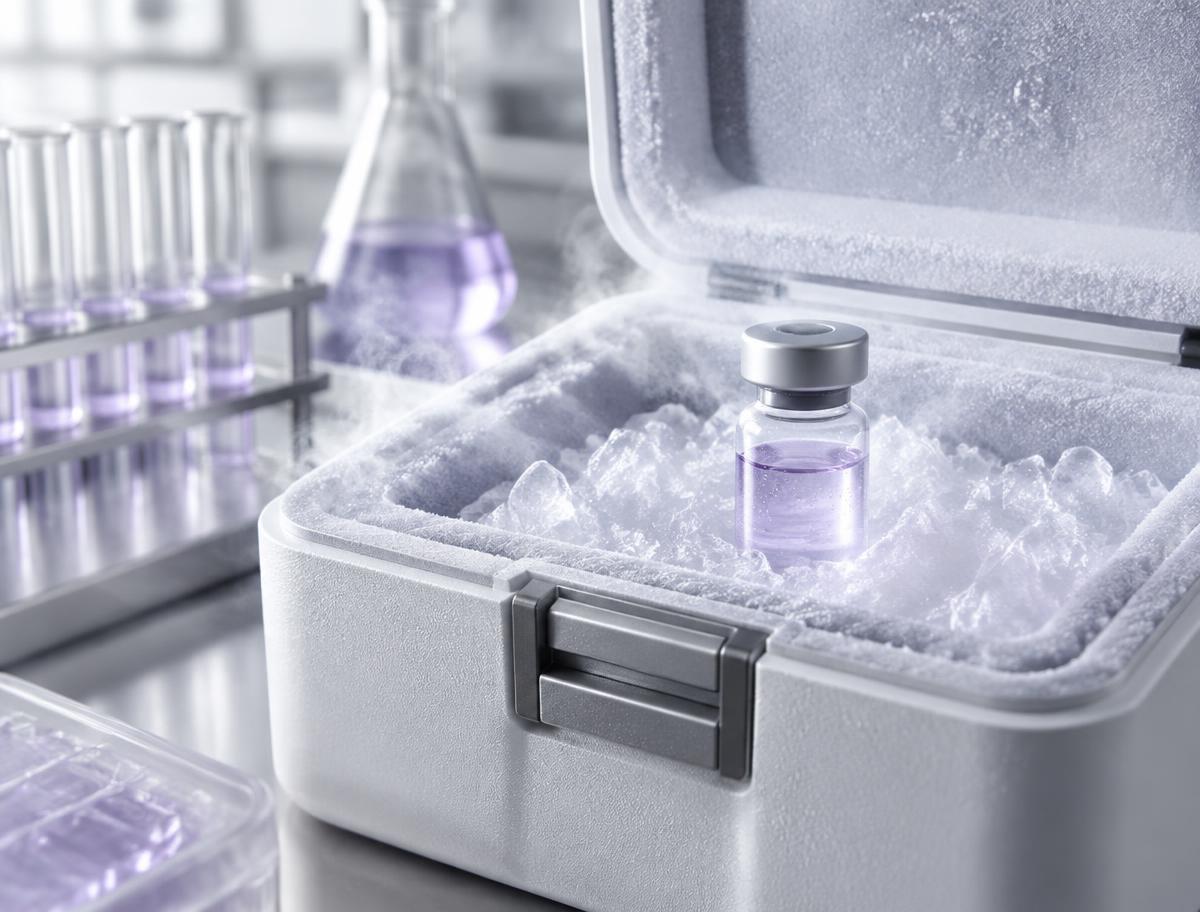
01Temperature sensitivity
Research peptides are supplied in a lyophilised state to support stability in transit and storage. Even so, prolonged exposure to heat, moisture and repeated temperature cycling should be avoided. A controlled logistics process reduces unnecessary environmental variation between release from the facility and arrival at the receiving laboratory.
02Packaging for transit
Each KAELON order is packed to protect the primary container from movement, light and physical impact. The external parcel is discreet and fully tracked, while the internal presentation keeps vial and batch information visible for receiving checks. Dispatch records provide a clear handover trail without making claims beyond the validated condition of the product.
03Receiving procedure
On arrival, laboratories should inspect the parcel, reconcile the vial labels against the order and record the batch references before storage. Any visible damage or discrepancy should be photographed and reported before the material enters a workflow. This simple receiving record preserves traceability and supports consistent handling across multiple lots.
04A note on cold-chain terminology
Not every lyophilised research compound requires refrigerated transport. The appropriate controls depend on the material, route and journey duration. KAELON uses protective, tracked dispatch and publishes product-specific storage guidance; researchers remain responsible for incorporating that guidance into their own documented laboratory procedures.
Research use notice
KAELON compounds are supplied exclusively for in-vitro laboratory research. They are not medicines and are not for human or veterinary use.
The KAELON catalogue is available to registered researchers.
Create a free researcher account to view the catalogue